
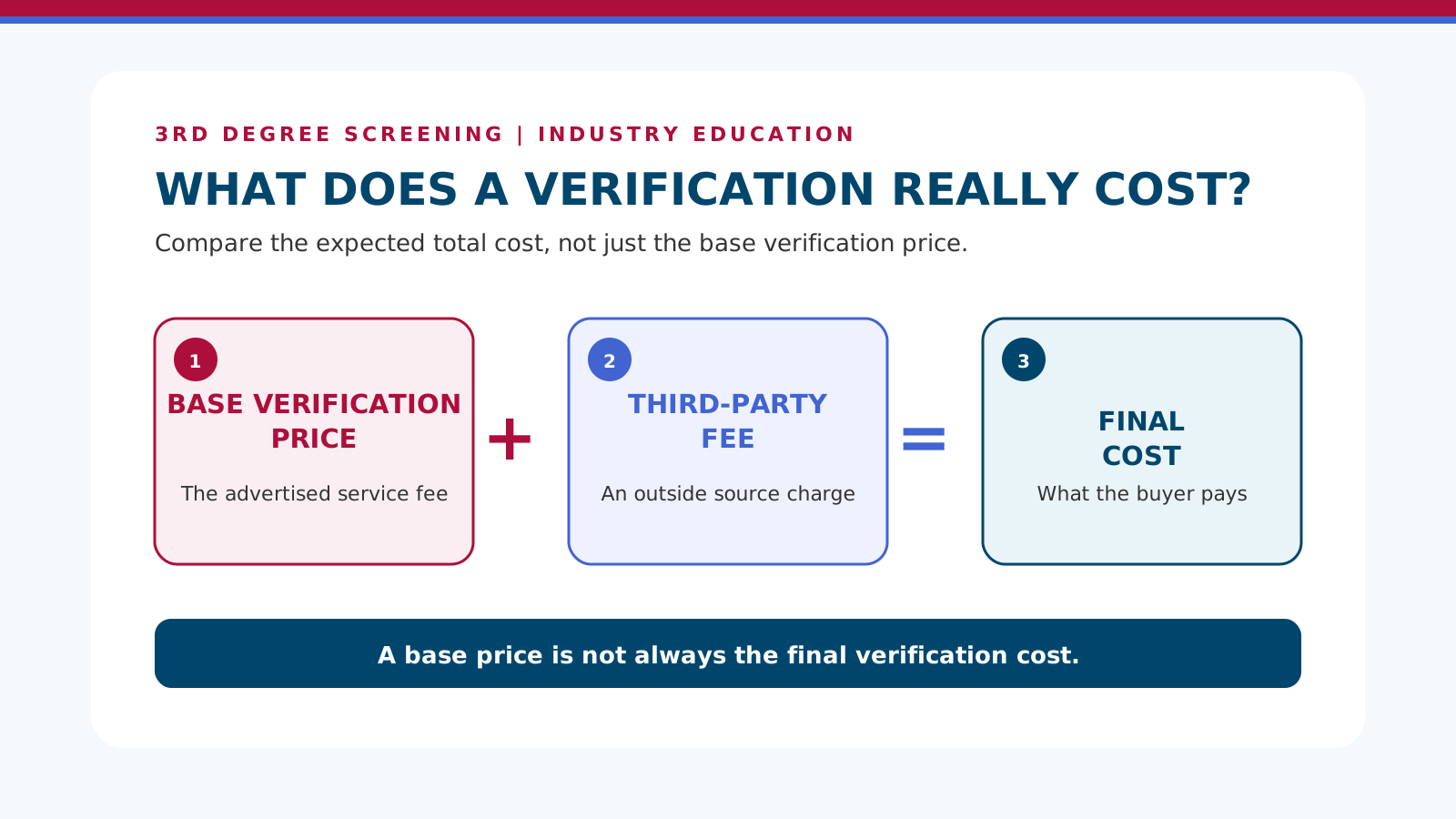
“A base verification price is not always the final verification cost.”
Employment and education verifications are different from many other background screening services because the information is often controlled by an employer, school, or an authorized third-party verification provider. When that outside source charges a fee, the cost may be passed through to the buyer in addition to the background screening company’s service fee.
The issue is not that third-party fees exist. In many situations, they are unavoidable if the buyer wants the official verification from the source designated by the employer or school. The bigger issue is whether the buyer understands when those fees may occur, what the provider will charge, and what happens if the buyer chooses not to pay them.
Why Third-Party Fees Appear
Many employers and schools no longer complete verifications directly. Instead, they route requests through designated verification services. Employment verification providers can include services such as The Work Number and other outsourced verification platforms. Education institutions frequently rely on services such as the National Student Clearinghouse, Parchment, and similar providers.
When a verification source charges the CRA to retrieve the information, that charge becomes part of the cost of completing the verification. Buyers should expect that possibility and should understand how their provider handles it before orders begin.
The Base Price Is Not Always the Total Price
A buyer may see an employment verification price and reasonably assume that is what every completed verification will cost. That can create sticker shock when an outside provider fee is later added to the invoice.
The better comparison is not simply the advertised verification price. Buyers should compare the expected total cost of a completed verification, including likely third-party fees and any markup applied to those fees.
Buyer Takeaway
Ask what the verification costs when an outside provider is required, not only what the base verification service costs.
Not Every CRA Handles Third-Party Fees the Same Way
Many third-party fees are broadly similar across the screening industry because the underlying source is charging the fee. However, the amount ultimately billed to the buyer can vary by CRA. A provider may have a different contract with the verification source, may pass through the exact source cost, or may add an additional amount on top of the outside fee.
The Work Number is a good example of why buyers should ask questions. The fee a CRA pays can depend on that CRA’s agreement with Equifax, and different screening providers may therefore quote different pass-through amounts. Buyers do not need to assume that one provider’s fee will automatically match another provider’s fee.
Understand the Verification SLA Before You Buy
Pricing is only part of the question. Buyers should also understand the workflow their screening provider follows before moving to a paid source.
Some providers may first attempt to contact the employer or school directly. Others may automatically use a verification database or waterfall that starts with a paid third-party provider. Neither approach is inherently wrong, but they can create very different cost and turnaround outcomes.
A buyer should know whether the CRA attempts direct verification first, how many attempts are made, when the process moves to a paid source, and whether paid third-party access is automatically authorized.
Avoid Thresholds That Create More Friction Than Savings
It can be tempting to approve third-party fees only up to a certain dollar amount. In practice, that can create inconsistent workflows, manual approvals, and unnecessary delays.
A cleaner policy is usually to decide which of two approaches the organization wants: automatically authorize required third-party verification fees, or decline paid third-party access and use alternative documentation methods when possible.
That decision should reflect the organization’s priorities around speed, applicant experience, documentation quality, and cost.
What Happens If You Choose Not to Pay the Fee?
There are alternatives in some situations. For employment verification, an applicant may be asked to provide W-2 forms, pay stubs, offer letters, separation letters, or other employment records. For education, the applicant may provide a diploma, transcript, degree certificate, or other school-issued documentation.
Those alternatives can reduce outside fees, but they may also increase turnaround time and applicant friction. The candidate may need time to locate older documents, the CRA may need additional follow-up, and the documentation may not provide the same information as the official verification source.
The buyer therefore needs to decide what faster access to official information is worth. A fee that appears high in isolation may be less costly than extending a hiring decision by several days while the candidate searches for alternate documentation.
One Fee or Multiple Fees? Ask Before the Invoice Arrives
Another important question is how the CRA bills when multiple employers require the same third-party source. If a candidate has three prior employers and all three verifications require The Work Number, buyers should understand whether the third-party fee applies once or once for each employer verification.
That detail can materially affect the expected cost per completed report and should be clarified in advance.
What Buyers Should Require in an RFP or Agreement
- A current schedule of the most common employment and education third-party verification fees.
- A clear explanation of whether third-party fees are passed through at cost or include additional markup.
- The current The Work Number pass-through fee and how that fee is applied when multiple employers are verified.
- The verification SLA, including whether the provider attempts direct verification before moving to a paid source.
- The buyer’s policy for automatically approving or declining third-party verification fees.
- The alternative process used when the buyer elects not to pay an outside verification fee.
- A process for notifying the buyer when commonly charged third-party fees change.
Questions Every Buyer Should Ask
- What third-party fees are most likely to appear on employment and education verifications?
- What is your current The Work Number pass-through fee?
- Do you add markup to outside verification fees?
- Do you attempt to verify directly with the employer or school before using a paid source?
- If multiple prior employers use the same paid source, how many times is that fee charged?
- What happens if we choose not to pay third-party verification fees?
- How does avoiding paid sources typically affect turnaround time and candidate experience?
The Bottom Line
Third-party employment and education verification fees are a normal part of the screening process when employers and schools outsource access to their information. Buyers should not evaluate providers on base verification price alone.
The Bottom Line
Compare the expected total cost, understand the verification workflow, know whether outside fees are marked up, and decide in advance whether your organization will authorize paid third-party verification sources.
About the Author
Jimmy Waters is CEO of 3rd Degree Screening, a consumer reporting agency providing employment background screening and verification services to organizations across the United States. He works with employers on screening strategy, verification workflows, compliance, adjudication, and candidate experience.
Source Used for This Buyer Guide
3rd Degree Screening, Understanding Third-Party Fees: Employment & Education Verifications. The source document explains why third-party fees may appear, lists common employment and education verification providers, and outlines the option of using applicant documentation when a buyer elects not to pay an outside source fee.
Educational content only. Not legal advice. Third-party fees, source access, and verification procedures can change without notice and may vary by employer, school, provider, contract, and jurisdiction.